
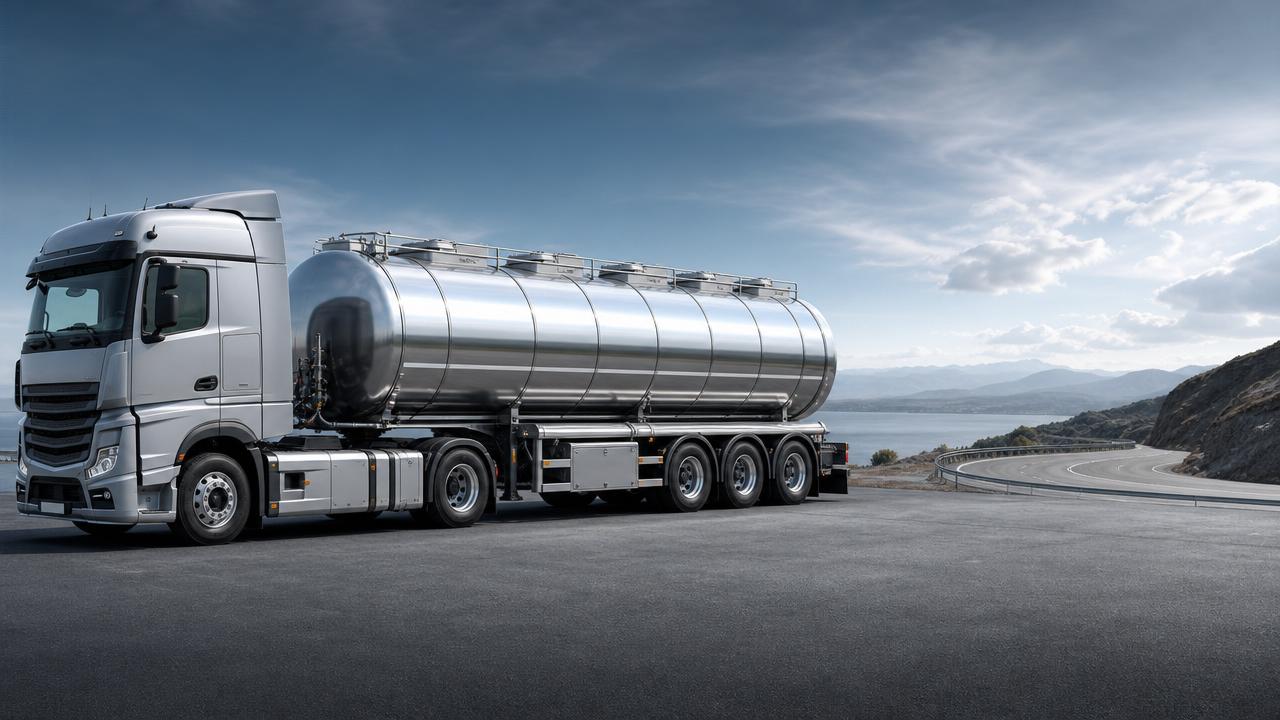
Tank truck capacity directly affects road safety, operating costs, and cargo stability. So, how do you choose the right tank truck capacity? The answer depends on payload limits, liquid movement, route conditions, and loading frequency. Choosing a tank that is too large or too small can increase rollover risk, reduce efficiency, and create compliance issues. Understanding where capacity becomes a safety concern is essential for every fleet operator.
For trailer operators, distributors, fuel haulers, chemical carriers, and bulk liquid fleets, capacity is not just a volume number. It is a design decision tied to axle loading, center of gravity, baffle performance, braking distance, and legal road limits. In practice, the right answer to how do you choose the right tank truck capacity? usually comes from matching the trailer to the cargo, route profile, unloading pattern, and daily trip cycle.
A 30,000-liter tank may look efficient on paper, but on steep grades, uneven rural roads, or partial-load operations, it can create more risk than value. On the other hand, a smaller 18,000-liter or 22,000-liter tank may improve stability yet reduce revenue per trip if the route allows higher payloads. Capacity becomes a safety risk when the trailer configuration no longer matches the liquid behavior, chassis design, and operating environment.
Why Tank Truck Capacity Becomes a Safety Issue in Trailer Operations
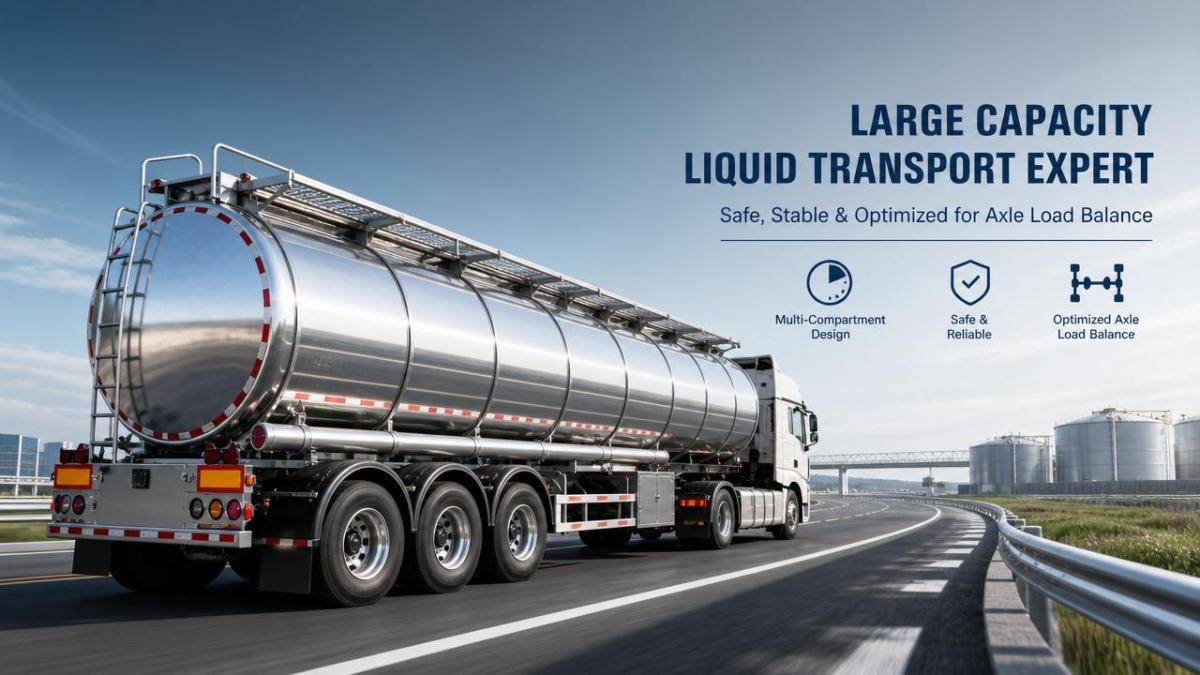
In the trailer industry, capacity affects more than loading volume. It changes how the liquid moves during braking, cornering, lane changes, and downhill travel. Once tank size increases beyond the stable operating envelope of the trailer and route, the risk profile shifts quickly. That is why fleets asking how do you choose the right tank truck capacity? must start with safety before utilization.
Liquid Surge and Partial Load Instability
One of the most common hazards is surge. When a tank trailer carries liquid at 30% to 70% fill level, the moving cargo can create strong forward, rearward, and lateral forces. These forces are amplified in longer tanks, especially on multi-stop delivery routes. A trailer that performs safely at full load may behave very differently at 50% load after two or three unload points.
This matters for milk tankers, fuel trailers, edible oil tankers, and non-corrosive chemical transport. If the tank is too large for the typical drop pattern, the operator may spend most of the day in the surge-sensitive zone. In that case, the question is not simply how much can the tank hold, but how often it operates in the least stable condition.
Typical factors that increase surge risk
- Fill levels between roughly 30% and 70%
- Frequent braking in urban or mixed traffic routes
- High center-of-gravity tank designs
- Long compartments with limited internal flow control
- Multi-drop delivery schedules with 3 to 8 unloading stops per shift
Payload Limits and Axle Compliance
A larger tank does not always mean a legal payload. In many regions, axle group limits, gross combination weight limits, and bridge regulations can reduce usable capacity well below the shell volume. For example, a trailer body designed for 35,000 liters may only be safely and legally loaded to 26,000 to 30,000 liters depending on liquid density and tractor-trailer configuration.
This is especially important for high-density liquids. Water is about 1.0 kg/L, but some chemicals can exceed 1.2 kg/L, while fuels may be closer to 0.72 to 0.85 kg/L. The same trailer can be compliant for diesel yet overloaded for a denser product. That is why how do you choose the right tank truck capacity? should always be answered in both liters and kilograms.
The table below shows how volume alone can mislead a fleet manager when comparing trailer capacity for different liquid categories.
The main takeaway is clear: shell volume is only one part of capacity selection. Safe trailer capacity depends on density, legal weight, and fill pattern. Fleets that ignore this often buy tanks that are technically large but operationally restricted.
Rollover Threshold and Center of Gravity
As tank capacity rises, the trailer may sit higher, stretch longer, or require a different compartment layout. Each of those changes can affect center of gravity and rollover threshold. On curves, roundabouts, and sudden evasive maneuvers, even a small increase in liquid height can make the trailer less forgiving.
A trailer running 200 to 300 days per year on highways may safely support a larger capacity than one operating daily on secondary roads with tight turns and uneven shoulders. If the route includes mountain descents, crosswinds, or construction detours, the safe capacity window becomes narrower. This is where trailer geometry, suspension quality, and tank profile matter as much as volume.
How to Choose the Right Tank Truck Capacity for Real Operating Conditions
If your team is asking how do you choose the right tank truck capacity?, the best method is to evaluate the route, cargo, loading pattern, and compliance limits together. Capacity should be selected through a 4-part assessment rather than by cargo demand alone. This approach reduces the chance of ordering a trailer that looks efficient but performs poorly in daily service.
1. Match Capacity to Product Density and Payload Window
Start by calculating the practical payload window. This means subtracting tractor weight, trailer tare weight, and mandatory safety margins from the legal gross combination limit. Many fleets use a planning reserve of 3% to 5% to avoid borderline overloading caused by temperature, metering variation, or uneven distribution across compartments.
Then convert allowable payload into working liters based on the transported liquid. This is often where oversized tank specifications are exposed. A trailer may physically hold 32,000 liters, but if your legal and density-adjusted usable volume is 25,500 liters, the extra shell space does not improve profitability and may complicate partial-load stability.
2. Review Route Type and Delivery Frequency
Capacity should reflect how the trailer actually moves. A dedicated long-haul route with 1 loading point and 1 discharge point supports different sizing than a regional route with 5 to 10 drops per day. More stops mean more surge events, more transitions through unstable fill levels, and more exposure to intersections, braking, and urban traffic.
Route condition also matters. Smooth highways permit a wider tank selection range than roads with steep grades, rough pavement, or frequent lane changes. A fleet working 150 kilometers on expressway may justify a larger capacity than one covering 80 kilometers through urban and industrial zones with repeated stop-start cycles.
3. Select the Right Compartment and Baffle Strategy
The answer to how do you choose the right tank truck capacity? is not only about total volume. It is also about how that volume is divided. A 28,000-liter trailer with 4 compartments may handle multi-product delivery and partial unloading more safely than a single-chamber tank of similar size. Internal compartmenting can improve load distribution and reduce free-surface movement.
For many liquid trailers, 3 to 6 compartments are common depending on product type and delivery model. More compartments can improve flexibility, but they also add valves, maintenance points, and cleaning complexity. The right balance depends on whether the fleet values route flexibility, contamination control, or maximum single-product throughput.
The table below compares common trailer capacity strategies for different operating models.
This comparison shows that the safest capacity is often the one most aligned with the operating pattern, not the largest one available. A medium-capacity trailer can outperform a larger unit if it spends less time under partial-load instability and remains compliant on every route.
4. Consider Trailer Chassis, Axles, and Suspension Together
Capacity decisions should never be separated from running gear. A tank trailer with 2 axles, 3 axles, air suspension, disc brakes, or different wheelbase lengths will behave differently under the same liquid load. In many cases, the practical answer to how do you choose the right tank truck capacity? is found by evaluating the full trailer package rather than the tank shell in isolation.
For example, increasing capacity by 15% may require changes in axle spacing, suspension tuning, braking specification, or shell support structure. If those changes are not made, the larger tank can create more tire wear, uneven axle loading, and poorer road handling. The trailer should be engineered as a system, not as a container with wheels.
Common Mistakes Buyers Make When Specifying Tank Trailer Capacity
Many procurement teams focus first on nominal liters because it is easy to compare in quotations. However, the nominal figure often hides critical trade-offs. Buyers who ask only for the biggest available tank can end up with lower real utilization, higher maintenance costs, and stricter operating limitations. Avoiding these mistakes can protect both safety and return on investment over 3 to 7 years of fleet use.
Choosing by Maximum Volume Instead of Usable Volume
A frequent error is treating shell volume as deliverable volume. In real trailer service, usable volume is constrained by density, temperature expansion allowance, legal load limit, and route conditions. If a tank is rarely filled above 80% for compliance reasons, then the extra capacity may add cost and risk without adding revenue.
Ignoring the Impact of Multi-Drop Operations
Another mistake is sizing the trailer for the first leg of the trip but not for the final half of the route. After several deliveries, fill levels may move into the most unstable range. A trailer that is calm at 95% full may become harder to control at 45% full on wet roads or in traffic circles. This is common in petroleum distribution and food-grade liquid delivery.
Underestimating Maintenance and Cleaning Effects
Larger or more complex tanks may require longer wash cycles, more valve inspections, and additional downtime. For some fleets, cleaning time can increase from 1 hour to 2.5 hours depending on product type, compartment count, and sanitary requirements. If the trailer carries multiple products, cleaning and contamination control become part of the capacity decision.
Buyer checklist before finalizing capacity
- Confirm legal payload in kilograms, not just shell liters
- Review the typical route: highway, urban, rural, or mountain
- Identify average unloading stops per trip
- Check whether the cargo is low, medium, or high density
- Evaluate compartment needs for partial loads and product separation
- Review cleaning frequency and maintenance access points
A Practical Specification Framework for Fleet Managers and Buyers
To reduce selection risk, many trailer buyers use a structured specification process. This does not need to be complicated, but it should be disciplined. A 5-step review can help answer how do you choose the right tank truck capacity? with fewer assumptions and better alignment between purchasing, operations, and compliance teams.
Step-by-step capacity review process
- Define the top 1 to 3 liquids to be transported and their density range.
- Map the average route length, road type, and delivery frequency over a 7-day cycle.
- Calculate legal payload by axle and total gross weight with a 3% to 5% operating margin.
- Compare full-load efficiency against partial-load stability for the expected delivery pattern.
- Confirm the trailer layout, compartment count, and suspension specification before production.
This framework helps avoid over-specification and under-specification at the same time. It also creates a more useful discussion with trailer manufacturers because the conversation moves from “largest capacity available” to “safest and most productive capacity for this route and cargo mix.”
When a Smaller Tank Is the Better Business Decision
In many B2B applications, a slightly smaller trailer can deliver better annual performance. If it reduces tire wear, keeps the vehicle legal on every dispatch, shortens wash time, and lowers rollover exposure, the total operating gain may exceed the loss of a few thousand liters per trip. This is especially true when routes are short, delivery points are numerous, or liquids are dense.
That is why the best answer to how do you choose the right tank truck capacity? is often based on total operating efficiency per month, not the maximum liters listed in a catalog. Buyers should compare annual trips completed, downtime hours, loading compliance, and incident risk instead of capacity alone.
Tank truck capacity becomes a safety risk when it exceeds the limits set by payload law, liquid behavior, route severity, and trailer design. For fleet operators in the trailer sector, the right capacity is the one that balances legal weight, stable handling, efficient unloading, and long-term operating cost. If you are evaluating new tank trailers, refining an existing fleet, or comparing capacity options for fuel, food-grade, or chemical transport, now is the right time to review the specification in detail.
Choose capacity based on usable payload, route profile, compartment strategy, and chassis configuration rather than nominal volume alone. A well-matched trailer will improve safety margins, reduce compliance pressure, and support more predictable daily operations. To get a tailored recommendation for your transport scenario, contact us today to discuss your route conditions, cargo type, and target capacity range, and get a customized tank trailer solution.