
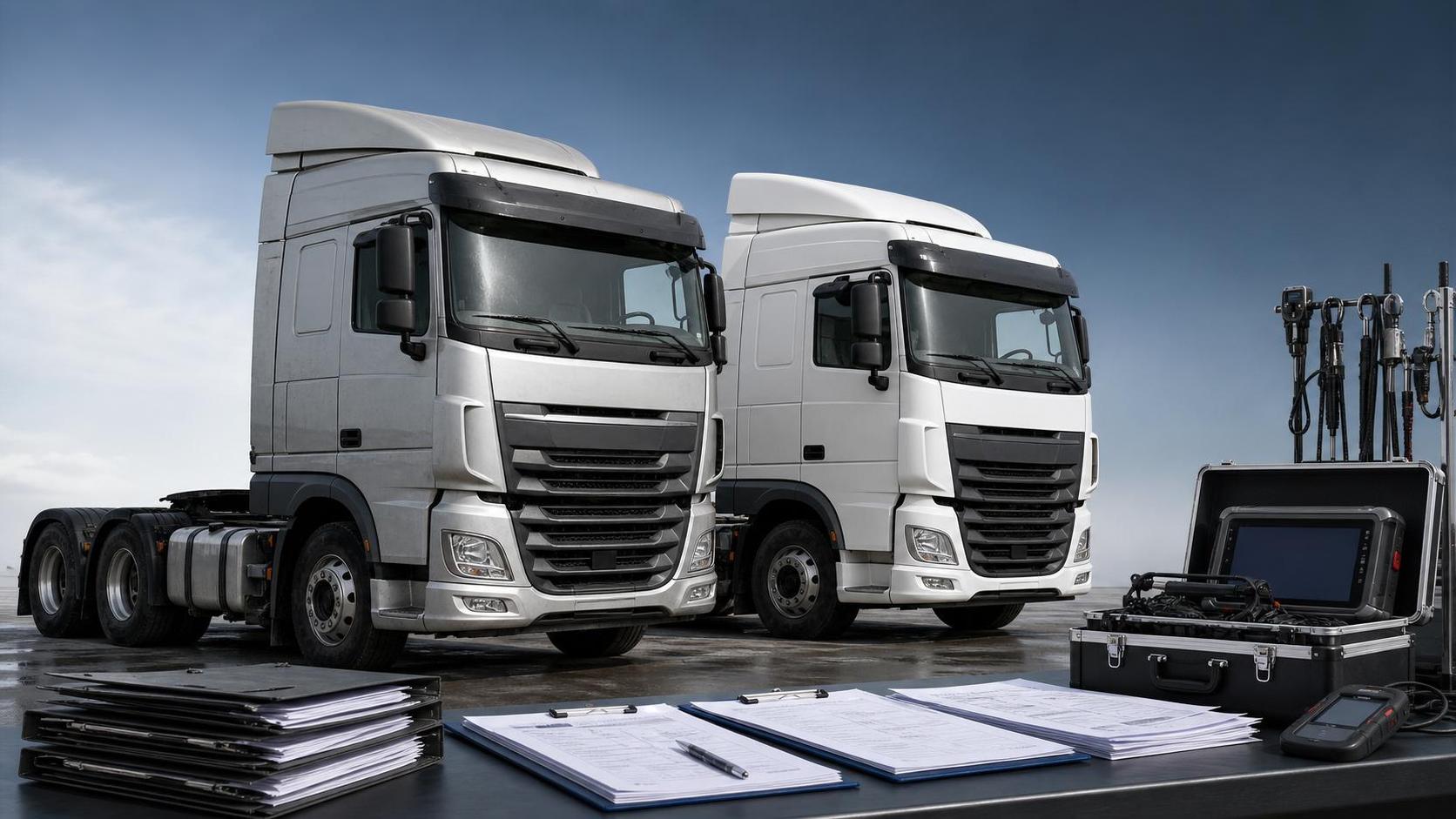
Choosing a used truck takes more than comparing engine size, mileage, or price tags. To make a smarter investment, buyers need to evaluate reliability, maintenance history, load performance, operating costs, and long-term business value. This guide explores how Cheduoduo used truck selection can help you look beyond basic specifications and identify the right truck for your hauling needs with greater confidence.
Most buyers searching this topic want one practical answer: how to tell whether a used truck will perform profitably after purchase, not just look acceptable on paper. The smartest comparison focuses on total operating value, hidden risk, and job fit.
That matters because two trucks with similar horsepower, mileage, and asking price can produce very different outcomes in fuel use, downtime, maintenance expense, payload efficiency, and resale potential. A surface-level comparison often misses the true cost of ownership.
For fleet operators, owner-drivers, and transport business decision-makers, the real question is not which truck appears cheaper today. It is which truck supports stable routes, reliable delivery schedules, and controlled costs over the next several years.
What Should You Compare First After Basic Specs?

After checking model year, engine type, mileage, and price, the next priority is service history. A complete maintenance record often tells you more about future reliability than a low odometer reading alone.
Look for evidence of regular oil changes, transmission servicing, brake replacement, tire rotation, suspension work, and emissions system maintenance. Consistent records suggest disciplined ownership, while gaps may signal neglected care or undocumented repairs.
Inspection reports also deserve close attention. If a seller can provide recent workshop findings, parts replacements, or major overhaul documentation, you gain a clearer view of wear patterns and the truck’s actual operating condition.
Cheduoduo used truck selection becomes valuable here because it encourages buyers to compare trucks through a broader operating lens. Instead of stopping at visible specs, buyers can screen options according to condition transparency and maintenance credibility.
How Do You Judge Reliability Beyond Mileage?
Mileage alone does not define remaining truck life. A high-mileage truck that ran predictable highway routes and received disciplined maintenance can be more dependable than a lower-mileage truck exposed to heavy overloads, stop-start cycles, or poor service habits.
To judge reliability, inspect the engine cold start behavior, exhaust color, fluid leaks, idle stability, transmission shift response, steering looseness, brake feel, and unusual chassis vibrations. These signs reveal more than numbers listed in an online ad.
Pay attention to the relationship between truck age, route history, and previous cargo type. Trucks used for long-distance freight often age differently from trucks used in urban delivery, construction support, or repeated heavy-load trailer work.
Frame condition is another key factor. Rust, cracks, welding marks, and uneven wear can indicate fatigue, collision history, or repeated overloading. Structural issues may not show up in a spec sheet, but they can affect safety and long-term operating value.
When comparing several units, create a simple reliability scorecard. Rate each truck for service history completeness, engine condition, transmission behavior, chassis health, tire wear consistency, and visible repair quality. This method supports better buying decisions than price comparison alone.
Why Does Load Performance Matter More Than Advertised Power?
Many buyers focus on horsepower and torque figures, but those numbers only matter in context. What really counts is how the truck performs with your typical trailer, route profile, road conditions, and daily load cycle.
A truck can look strong on paper yet struggle in real operations if the axle ratio, transmission setup, suspension condition, or braking system does not match your hauling requirements. Performance must be evaluated as a working combination, not a headline figure.
Start by defining your real operating scenario. Consider average payload, trailer type, climbing demands, road quality, loading frequency, and expected daily distance. This helps you avoid paying for capability you do not need or buying too little truck for demanding work.
If your routes include steep grades, uneven rural roads, or frequent full-load starts, you should prioritize drivetrain response, suspension integrity, and braking confidence. If your work is mostly long-haul highway transport, fuel efficiency and steady cruising behavior may matter more.
Cheduoduo used truck selection is most useful when buyers compare truck capability against actual application. The right used truck is not simply the most powerful option. It is the one that handles your work consistently without creating unnecessary fuel and repair costs.
How Can You Estimate the Real Cost of Ownership?
Purchase price is only the entry cost. A better comparison includes fuel consumption, maintenance frequency, tire expense, insurance, downtime risk, parts availability, and expected residual value. These factors often decide whether a truck is profitable.
For example, a cheaper truck may require earlier engine work, repeated brake repairs, or more frequent suspension replacement. A slightly more expensive truck with cleaner service history and stronger parts support may save far more over twelve to thirty-six months.
Fuel cost should be evaluated using realistic route conditions, not optimistic seller claims. Compare engine age, emissions system condition, average load, and drivetrain efficiency. Older trucks with unresolved maintenance issues often consume more fuel than expected.
Parts accessibility also affects cost control. If a truck model has limited spare part supply or expensive proprietary components, future repairs may take longer and cost more. That can be especially damaging for businesses that depend on high vehicle availability.
Downtime deserves a direct financial estimate. Each unexpected repair can mean missed deliveries, disrupted schedules, replacement vehicle costs, and strained customer relationships. When comparing used trucks, lower downtime risk often justifies a higher upfront investment.
A useful buying method is to project one-year operating cost for each candidate truck. Include purchase price, expected repairs, preventive maintenance, fuel, tires, and likely idle days. This creates a much clearer business comparison than sticker price alone.
What Warning Signs Suggest a Truck May Become Expensive Later?
Some risks are easy to overlook during a fast purchase decision. Incomplete paperwork, inconsistent mileage records, mismatched tire wear, fresh paint over structural areas, unusual engine noise, and poor-quality welding all deserve further investigation.
Be cautious when a truck looks cosmetically impressive but lacks maintenance evidence. Clean interiors and polished exterior panels may improve first impressions, yet they do not guarantee sound mechanical condition or honest operating history.
Watch for signs of repeated overloading. Flattened suspension, uneven frame stress, abnormal brake wear, and axle-related repairs can indicate the truck worked beyond its intended limits. That history may shorten component life even if the truck still runs.
Electronic systems also matter. Dashboard warning lights, sensor faults, unstable idle control, or emissions-related problems can become recurring expenses. Modern trucks may hide costly issues behind what first appears to be a minor fault code.
A professional pre-purchase inspection remains one of the best ways to reduce risk. Even experienced buyers benefit from an independent mechanic who can assess drivetrain condition, hidden damage, and repair quality before money changes hands.
How Do You Compare Used Trucks for Different Business Scenarios?
Not every buyer should compare used trucks the same way. An owner-operator, a small fleet manager, and a regional logistics company often have different risk tolerance, financing structure, utilization rate, and maintenance capacity.
If you run a small business with limited backup vehicles, reliability and repair simplicity should rank above aggressive price savings. One truck out of service can affect revenue immediately, so predictable performance is more valuable than a lower purchase number.
For growing fleets, standardization matters. Choosing truck models with similar parts, service procedures, and driver familiarity can simplify training, inventory, and maintenance scheduling. Operational consistency often creates savings that are invisible during purchase negotiation.
If your work depends on specialized trailer use, compatibility becomes critical. Coupling systems, braking integration, chassis strength, and load distribution must match operational requirements. A truck that looks acceptable generally may still be inefficient for your specific trailer setup.
Buyers focused on long-haul efficiency may give greater weight to cabin condition, driver comfort, fuel economy, and stable road behavior. Businesses handling short-haul distribution may prioritize maneuverability, loading cycle durability, and frequent-stop brake performance instead.
What Makes a Comparison Process More Reliable and Repeatable?
The best buying decisions come from a structured process, not intuition alone. Build a checklist that scores each truck across condition, maintenance history, route fit, expected operating cost, and resale outlook. This helps separate emotion from financial judgment.
It is also wise to compare trucks in the same workload category. A highway-focused tractor and a truck used in harsher mixed-route hauling may look similar in age and mileage, but they should not be judged by the same expectations.
Ask sellers consistent questions for every candidate vehicle. Request maintenance logs, accident history, previous cargo type, engine repair records, ownership duration, and reason for sale. Standardized questions make hidden differences easier to spot.
Road testing should be consistent as well. Observe startup behavior, low-speed maneuvering, loaded or simulated pulling response, braking confidence, steering feel, transmission smoothness, and noise at different speeds. Compare impressions immediately after each drive.
Cheduoduo used truck selection supports this kind of disciplined comparison mindset. The goal is not just to find a truck quickly. It is to identify a unit that aligns with workload demands, budget stability, and long-term transport performance.
How Do You Know When a Used Truck Is the Right Choice?
The right truck is rarely the cheapest, newest-looking, or most heavily advertised option. It is the truck with credible history, suitable load capability, manageable operating cost, and condition that matches the work you expect it to do.
Confidence comes from combining records, inspection results, route matching, and cost forecasting into one clear judgment. If a truck performs well across those areas, it is usually a stronger investment than one relying only on attractive specifications.
Buyers who go beyond basic specs reduce the chance of expensive surprises after delivery. They also improve their odds of choosing a truck that supports reliable schedules, healthier margins, and better service performance over time.
In that sense, Cheduoduo used truck selection is not just about browsing available units. It is about evaluating used trucks with a smarter business mindset, where reliability, fit, and total value matter more than simple headline numbers.
Conclusion
Comparing used trucks beyond basic specifications is ultimately about reducing risk and improving return on investment. Price, mileage, and engine output are only the starting point. The better decision comes from understanding condition, maintenance quality, load suitability, and operating economics.
When buyers use a structured evaluation process, they make stronger decisions with fewer costly surprises. Whether you manage a fleet or operate independently, the most valuable truck is the one that works reliably, supports your hauling demands, and stays cost-effective over time.
That is why a practical, detail-focused approach to Cheduoduo used truck selection matters. It helps you move from simple comparison to informed decision-making, so you choose a truck based on business value rather than surface-level specifications.