
Choosing the right used trailers is often one of the quickest ways to cut transport costs without weakening day-to-day operations. For construction, logistics, and agricultural work, the real question is not whether a trailer is cheap, but whether it can still carry the right load, handle the right route, and stay dependable under repeated use. That is what matters when schedules are tight and downtime is expensive.
If you are responsible for equipment movement, fleet planning, or project delivery, a good used trailer can solve a practical problem: moving materials and machinery efficiently without tying up capital in new assets. The best choice depends on what you move, how often you move it, and how harsh the working environment is. That sounds simple, but in practice a trailer that looks fine on paper can still be the wrong fit for the job.
What makes a used trailer worth considering
The appeal of used trailers is straightforward. You usually get lower upfront cost, faster availability, and less financial pressure on a project budget. But a lower purchase price only matters if the trailer can still do the work safely and consistently. In many projects, a well-kept used trailer is a better operational decision than a brand-new model that pushes the budget too hard.
That said, the best value is not found by looking at age alone. Condition matters more than the year on the plate. A trailer that has been maintained properly, stored well, and used within its limits can be more useful than a newer one that has spent years overloaded or exposed to corrosive conditions. This is why experienced buyers look at frame integrity, suspension wear, braking system condition, deck condition, tire history, and signs of repair work before they look at cosmetics.
Used trailers for construction work
Construction projects tend to be hard on equipment. Loading is rough, routes are inconsistent, and payloads can shift between steel, aggregate, pallets, tools, and machinery. For that reason, the best used trailers for construction are usually the ones with simple structure, strong frames, and easy maintenance access.
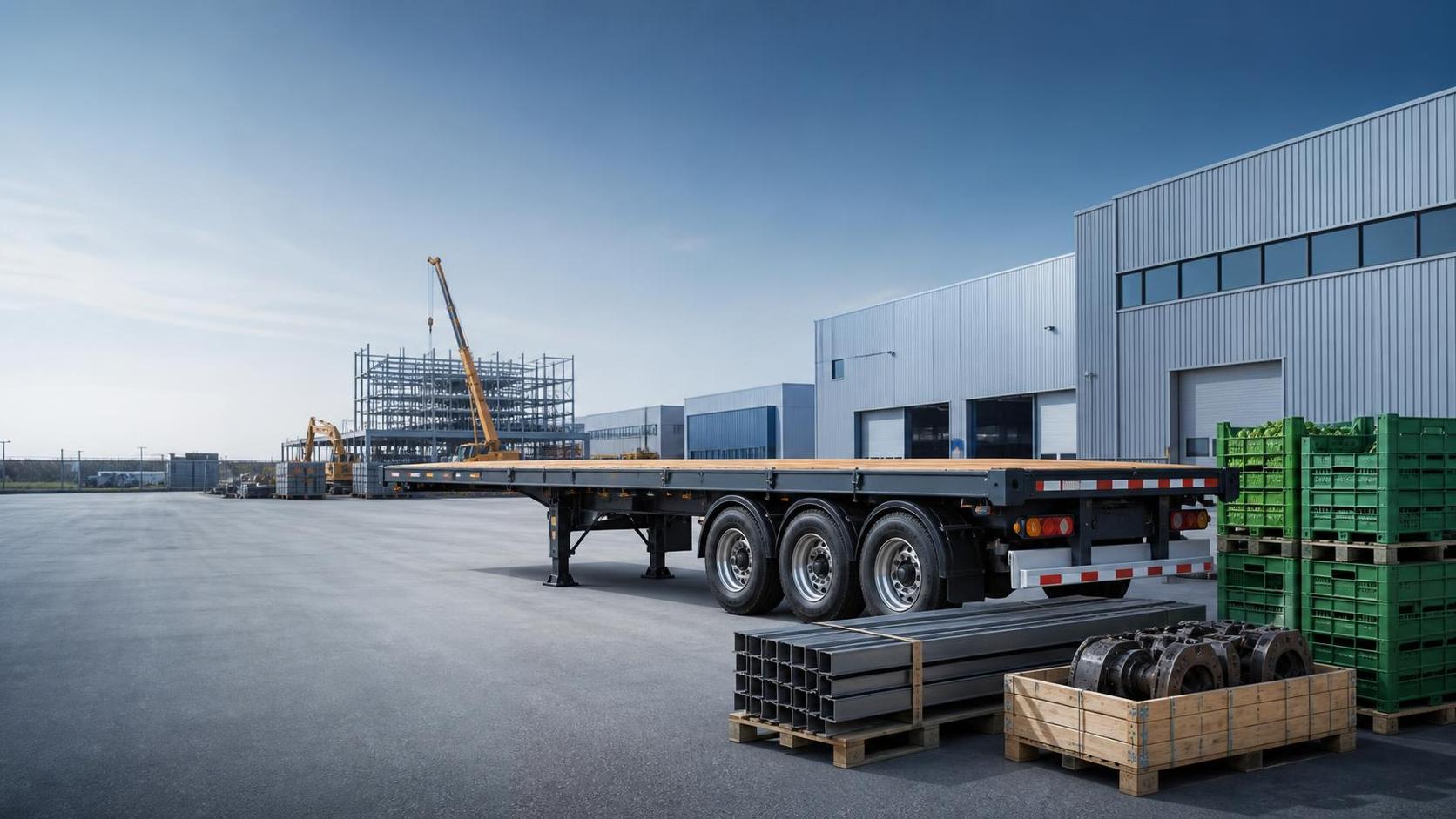
Flatbeds are often the first practical choice because they are flexible. They can carry palletized materials, large components, and equipment that does not fit in enclosed spaces. Lowboys and equipment trailers are more specialized, but they become valuable when a site regularly moves excavators, compactors, generators, or other heavy machines. The key is to match trailer height and deck design with the equipment profile. If loading angle is too steep or deck clearance is wrong, you create risk every time the machine moves.
One mistake I see often is teams buying based on maximum payload only. Payload matters, but so does how the load is secured and how easily the crew can load and unload it on uneven ground. On construction sites, practical handling usually beats theoretical capacity.
Used trailers for logistics operations
In logistics, consistency matters more than raw toughness. A trailer has to integrate into a routine: dock loading, route planning, turnaround time, and repeated inspections. The best used trailers for logistics are usually the ones that can keep moving without creating extra maintenance work or loading friction.
Dry van trailers are common in freight work because they protect cargo from weather and contamination. For projects involving general goods, packaging materials, or equipment parts, that protection can reduce damage and claims. Refrigerated units are a different category entirely and only make sense when temperature control is actually required. If a buyer is not moving perishable cargo, paying for reefer complexity rarely makes sense.
Logistics teams should pay close attention to door condition, floor strength, seal integrity, lighting, axle wear, and the state of the running gear. These are not cosmetic details. They affect loading speed, compliance, and operating cost. A trailer with hidden structural issues can cause more delay than a more expensive unit that has been properly inspected.
Used trailers for agricultural transport
Agricultural transport brings a different set of demands. Loads can be bulky, uneven, dusty, and seasonal. The trailer may need to handle feed, crops, livestock-related materials, fertilizers, or farm equipment. In that environment, durability and ease of cleaning often matter more than a polished finish.
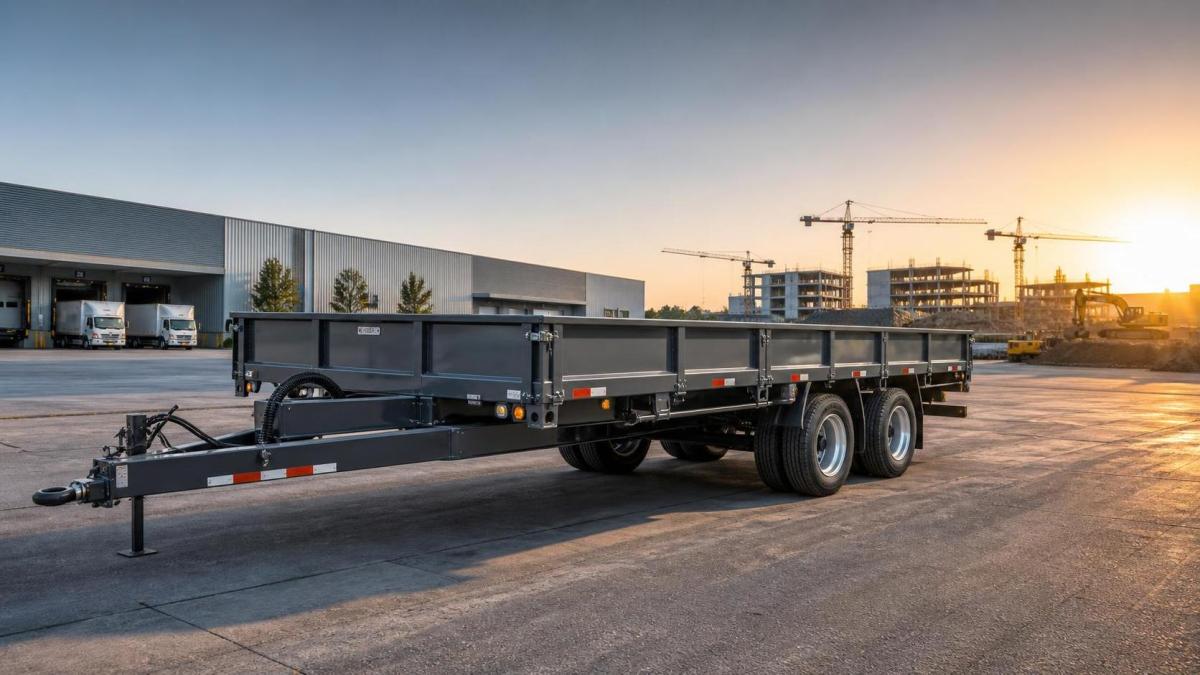
Dump trailers and utility trailers are often practical because they support loose material and repeated loading cycles. For farms moving machinery or bulk products, a trailer with a straightforward layout and strong suspension tends to hold up better than a more delicate design. Corrosion resistance also matters if the trailer works in wet fields or around chemicals. Buyers should inspect undercarriage wear carefully, because the visible body can hide substantial damage underneath.
In agricultural use, the wrong trailer choice usually shows up as wasted labor. If unloading is awkward, if the bed is too small for common loads, or if the trailer is difficult to clean, the team spends more time managing the trailer than using it.
How to evaluate used trailers before buying
There is a simple order that helps avoid bad purchases. First, confirm the actual job: load type, weight range, frequency, route quality, and site conditions. Then inspect the trailer against that job, not against a generic spec sheet. A trailer that is ideal for paved highway freight may be a poor fit for a muddy yard or a construction site with uneven access.
Look at the frame first. Rust, weld repairs, cracks near stress points, and uneven wear can tell you a lot about how the trailer lived. Next, check suspension, axles, tires, brakes, lights, couplers, ramps, flooring, and any hydraulics. If the trailer includes a lift, dump, or specialized mechanism, test it fully. A seller’s verbal assurance is not enough.
Paperwork matters too. Title status, registration, service records, inspection history, and any modifications should be reviewed before purchase. Modifications are not automatically bad, but they need to make sense for the intended use and should not create compliance problems. This part is often overlooked when teams are under pressure to buy quickly.
The most practical buyers also ask one more question: who will maintain it, and how often? A trailer that requires specialized parts or frequent downtime may be a poor fit even if the purchase price looks attractive.
Where used trailers make the most sense
Used trailers make the most sense when the operation needs capacity now, the budget is controlled, and the work is demanding but predictable. They are especially useful for project-based teams that need to scale transport capability without locking up capital in new assets. That is common in construction phases, seasonal logistics, and agricultural peak periods.
They are less suitable when the work depends on very tight compliance standards, specialized temperature control, or unusually high utilization with little tolerance for downtime. In those cases, the extra inspection burden can outweigh the savings. The decision is not about whether used equipment is “good” or “bad.” It is about whether the asset fits the operating pattern.
For many buyers, the best outcome comes from a balanced shortlist: one trailer type for heavy site work, one for general freight, and one for seasonal or bulk transport. That mix is often more useful than trying to find one unit that does everything.
For teams comparing used trailers, the right lens is operational fit. A trailer that is durable, easy to inspect, and matched to your load profile usually delivers better value than one that simply looks inexpensive at purchase. In construction, logistics, and agriculture, the best choice is the one that keeps work moving without creating avoidable repair cycles.